Code Is a Liability:
Why Clean Code Becomes a Survival Strategy in the AI Age
In the previous post, we discussed why code for AI agents should be “ugly” and dense to save tokens. But before you start deleting your vowels, we need to discuss the other side of the coin.
If AI makes code production free, we face a vast new problem: syntax inflation.
The counterpart to “AI-native architecture” is technical debt on steroids.
The Jevons Paradox of Code
Every line of code used to cost time and brainpower. We thought carefully about whether we really needed a class. Clean Code principles such as DRY (Don’t Repeat Yourself) were economic necessities.
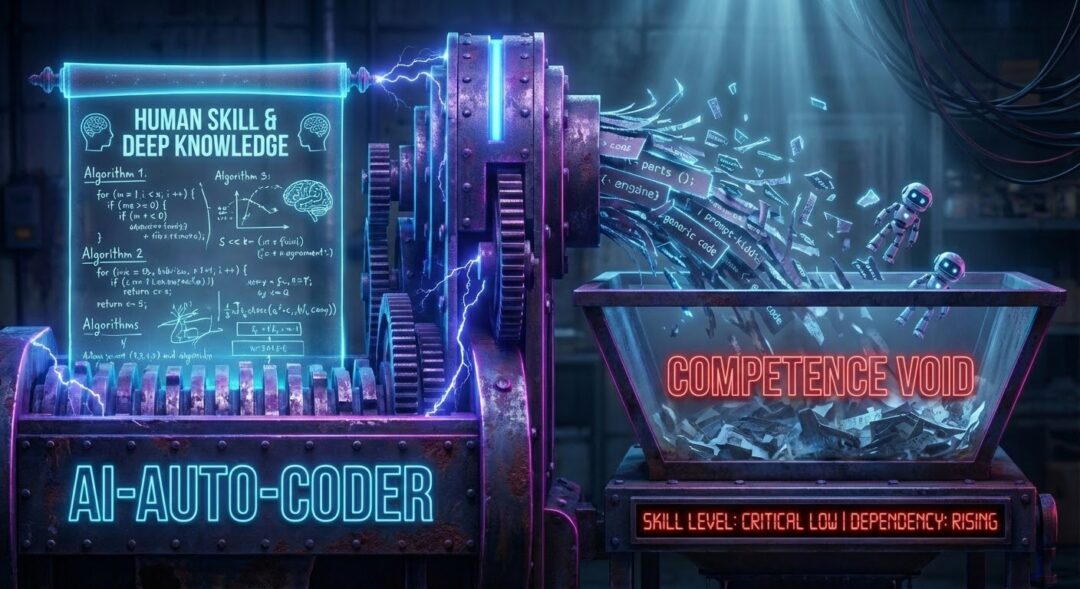
Today, generative AI reduces production costs to zero. This leads to the Jevons paradox: when a resource becomes more efficient – cheaper – consumption does not fall; it explodes. We are witnessing “code hyperinflation”. Where there used to be one function, AI now generates three variants, five helper classes and redundant logic, simply because it can.
The result is not more software, but code bloat. We are no longer building lean racing cars; we are building “rubbish compactors made of spaghetti code”.
The New Danger: Ghost Code
A particularly insidious phenomenon is ghost code: code that is syntactically correct, compiles and runs, but makes no sense in its business context.
For example, an AI-generated file uploader contains an except IsADirectoryError block. Sounds robust? No, it is madness. In a web upload, a browser technically cannot send a directory as a file. The code catches an error that cannot occur in reality. It is “cognitive pollution”. It must be maintained, tested and read by people wondering: “Wait, do we have a security vulnerability here?”
Why Clean Code Still Makes Sense as Minimalism
In my previous blog post, I argued against “chatty” Clean Code – long names and comments. Now I am passionately arguing for the core of Clean Code: simplicity and reduction.
“Code is not an asset. Code is a liability.”
Every line of code you own must be maintained, secured and migrated. AI is a machine that increases your debt exponentially. In this context, Clean Code does not mean “pretty formatting”; it means distillation.
The Strategy: The Zen Master of Deletion
Meet Kenji, a distinguished engineer who is proud to have deleted more code than he has written. His approach to the AI flood:
- Rejection: He does not accept 1,000 lines of AI code when the problem can be solved in 100.
- Code diet: He forces the AI to slim down. Prompts such as “Reduce the line count by 50%” counter the models’ natural verbosity.
- Gardeners, not bricklayers: We no longer stack bricks. We pull weeds in a jungle that grows overnight.
Conclusion
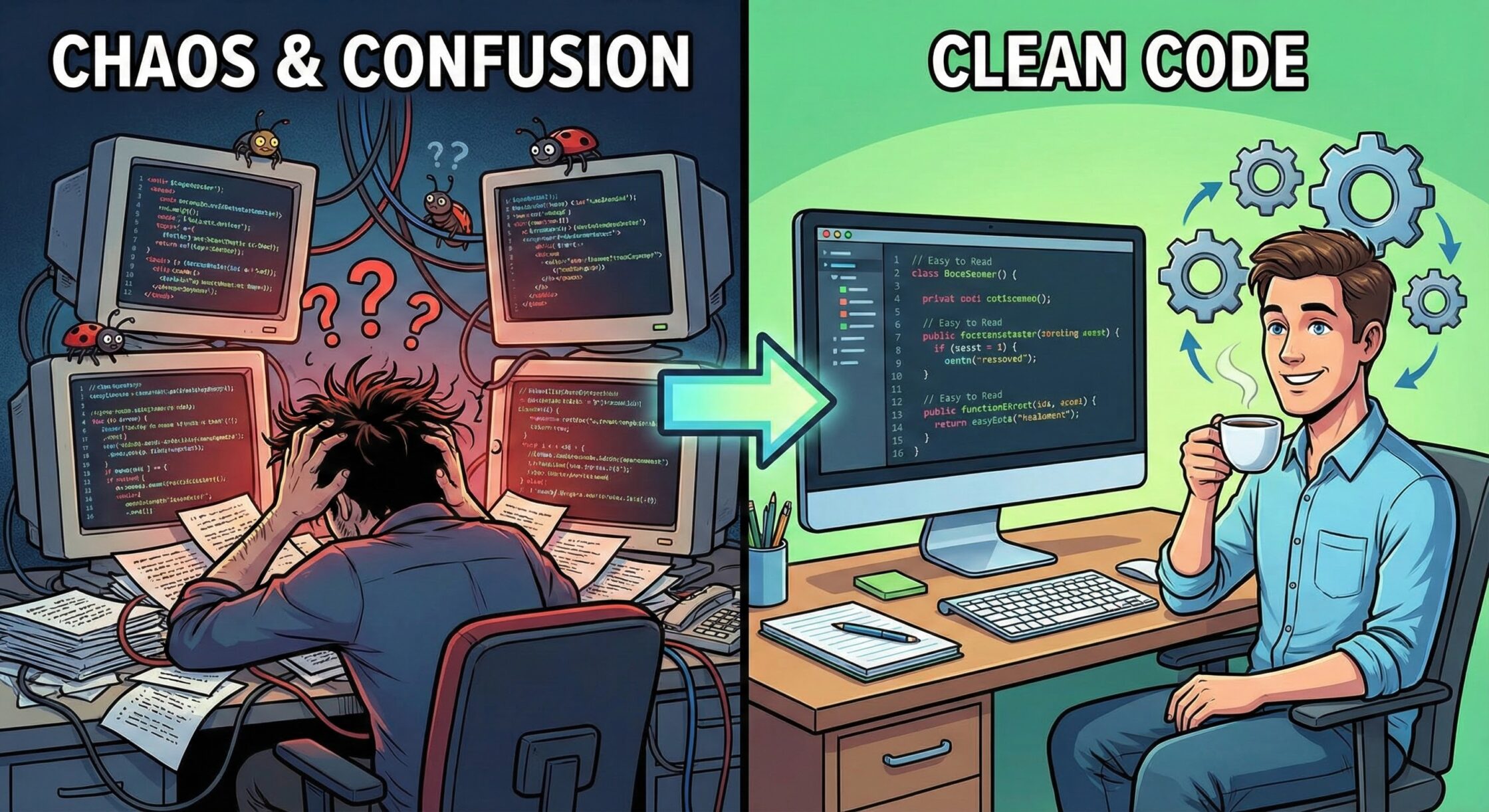
Clean Code is not dead. Its function has simply changed. It used to make code readable for people. Today, it protects systems from suffocating under AI-generated rubbish.
To survive in a world of unlimited code production, you must master the art of deflation. Your value as a developer is no longer measured by how quickly you build features, but by how much unnecessary code you prevent.